
Language
Save


TTSK-XP-G6: Programmable wideband signal generation with fast frequency sweep for UAV countermeasure and communication control
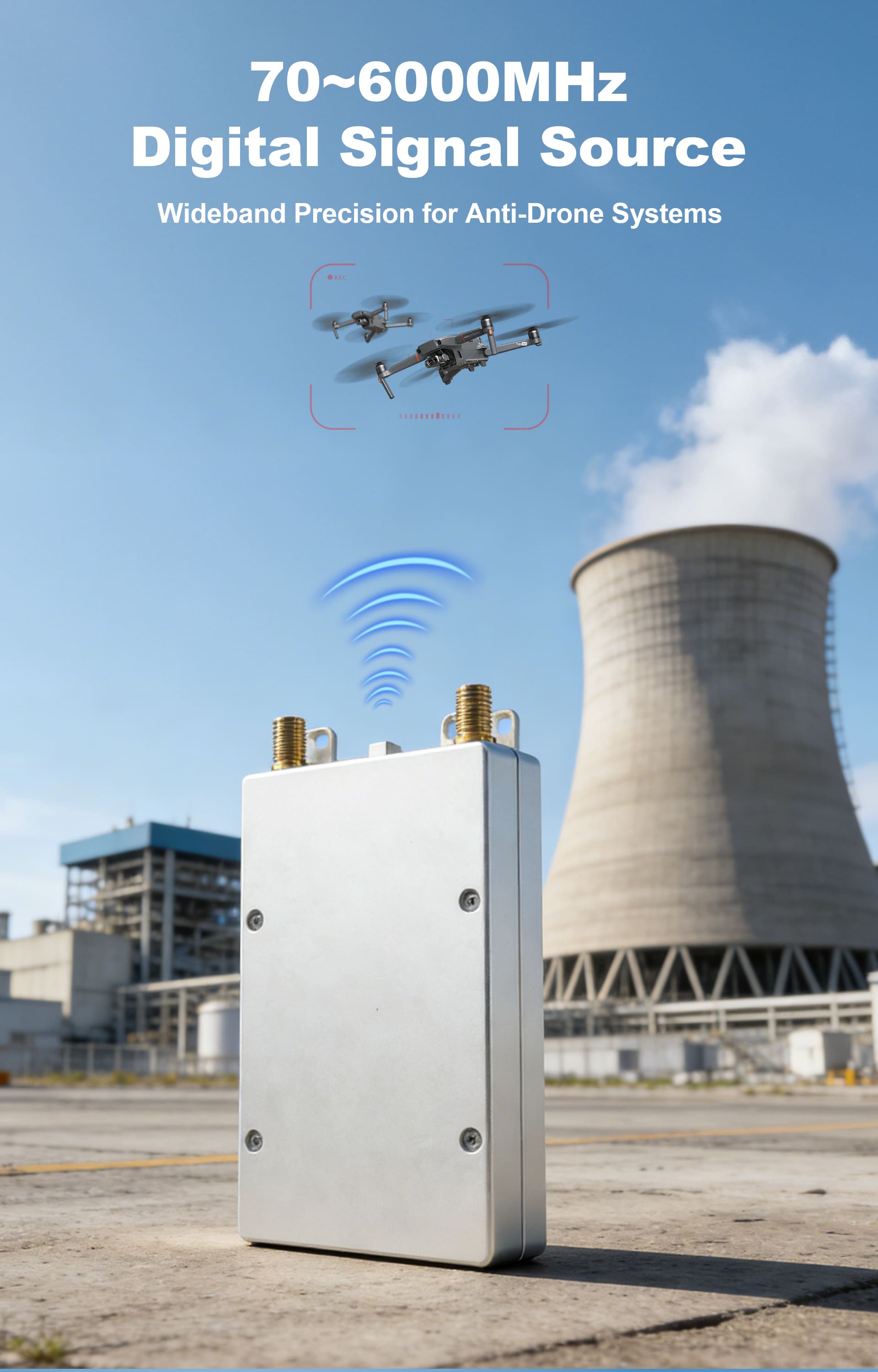
The Digital RF Source Module is a programmable wideband signal generation unit designed for multi-band jamming systems operating in complex electromagnetic environments.
It is typically integrated with broadband RF power amplifier modules to form a complete UAV countermeasure and communication control solution.
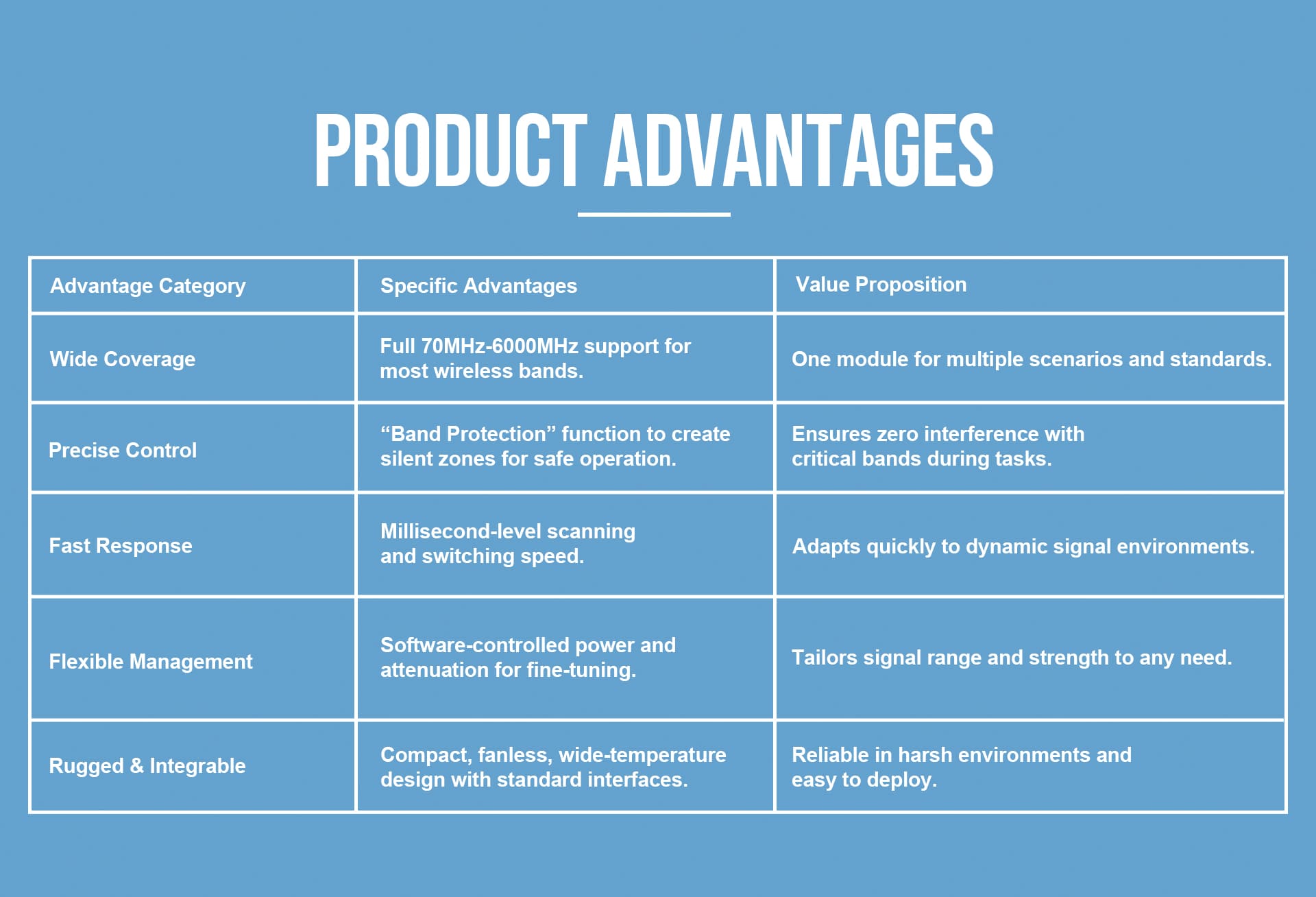
With dual RF outputs covering 70 MHz to 6000 MHz, the module supports fast frequency sweeping, adjustable bandwidth up to 400 MHz, and flexible waveform configuration.
Software-based control enables precise frequency management, making it suitable for anti-drone systems, electronic warfare applications, and spectrum interference tasks.
Dual RF outputs covering 70–2000 MHz and 2000–6000 MHz
Wide instantaneous bandwidth up to 400 MHz
Fast frequency sweep with programmable step and dwell time
Adjustable digital attenuation (0–10 dB)
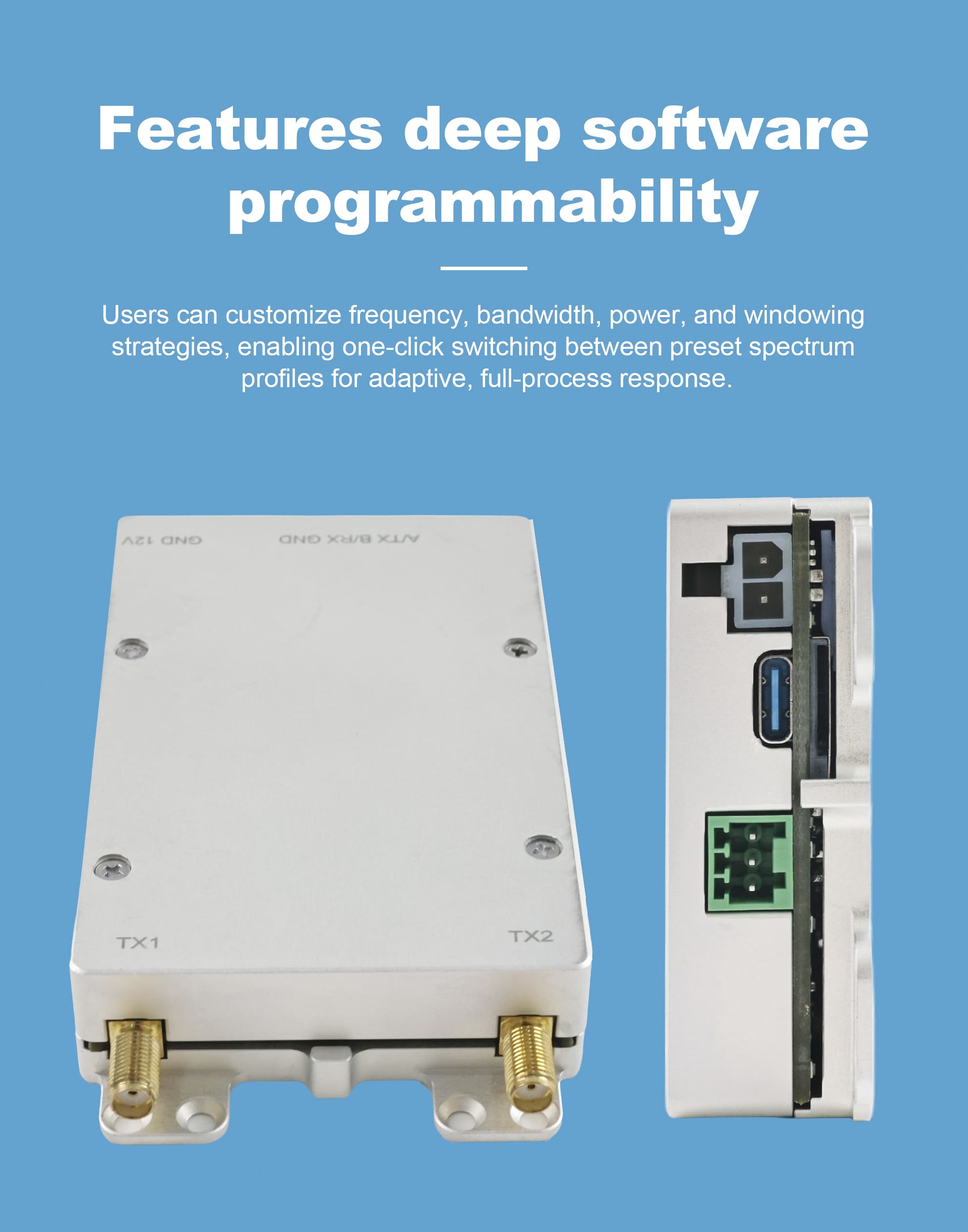
Software-controlled operation via RS485
Compatible with Windows, Linux, and macOS
Designed for integration with broadband RF power amplifiers
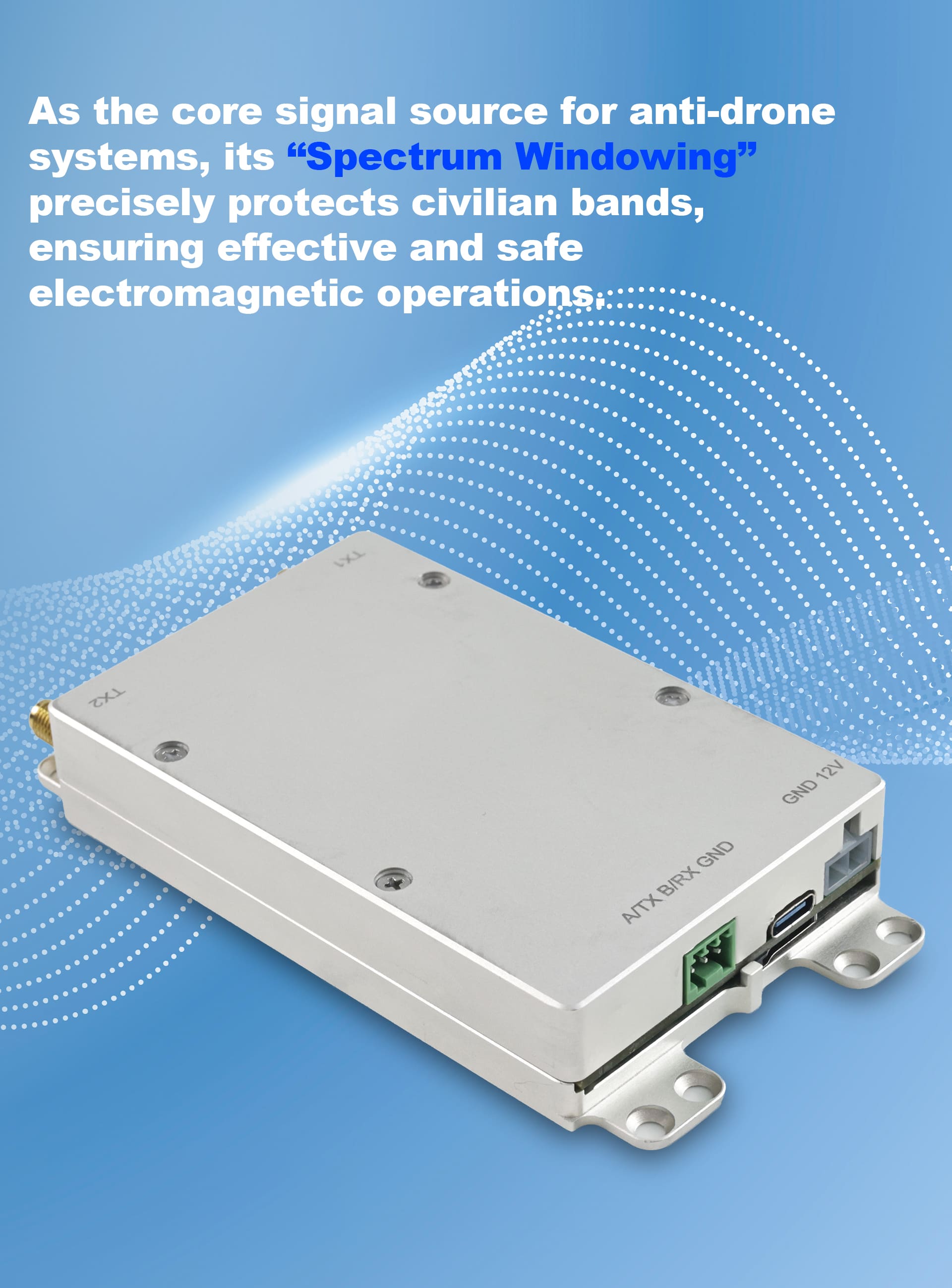
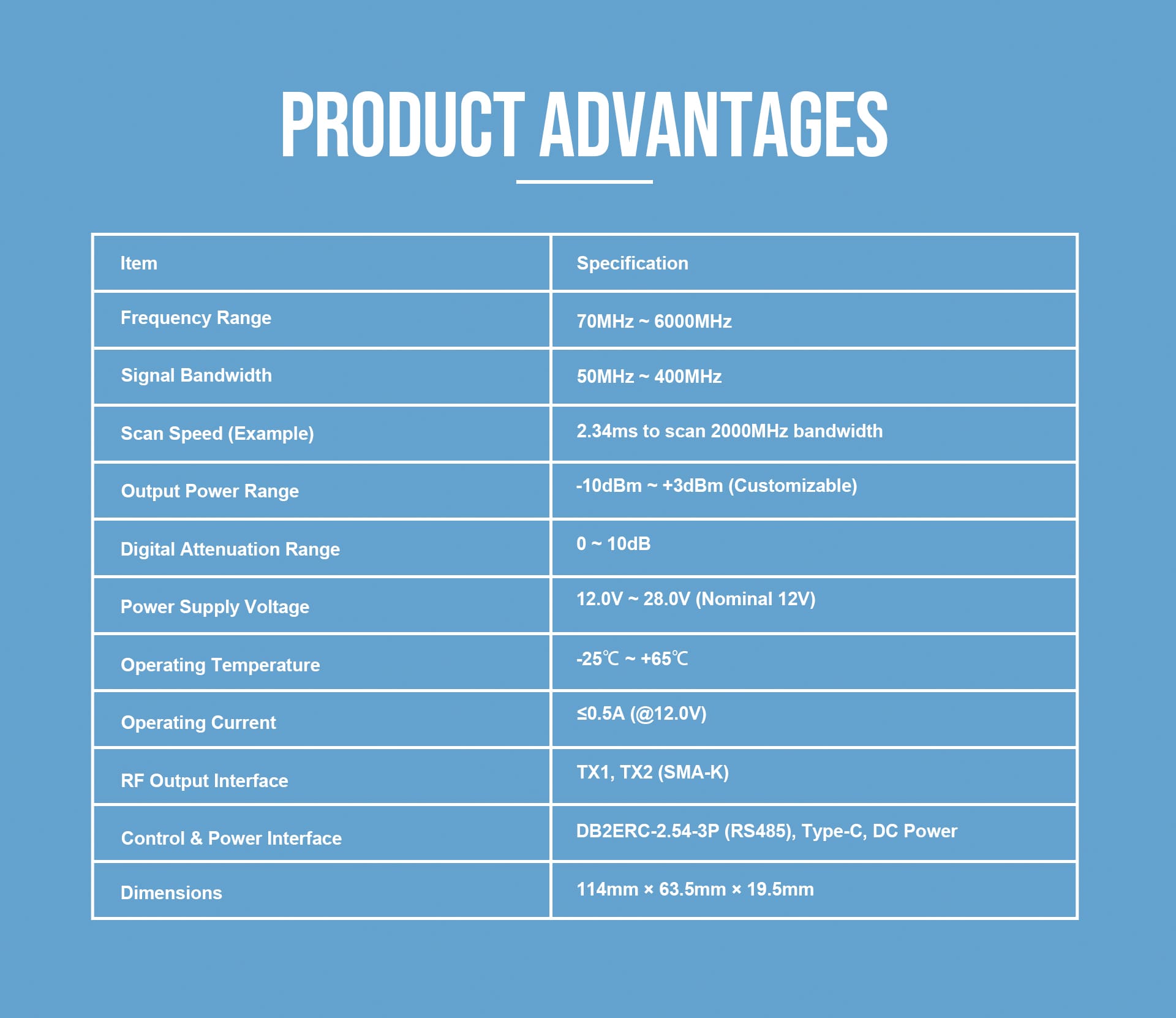
Output Channels: Dual (TX1 & TX2)
TX1 Frequency Range: 70 – 2000 MHz
TX1 Output Power: 0 – 7 dBm
TX2 Frequency Range: 2000 – 6000 MHz
TX2 Output Power: 6 – 19 dBm
Instantaneous Bandwidth: 50 – 400 MHz
Maximum Sweep Bandwidth: 400 MHz
Minimum Frequency Step: 1 MHz
Sweep Time:
2000 MHz bandwidth: 2.34 ms
400 MHz bandwidth: 0.123 ms
Default Waveform: Hybrid CW + 1 MHz FSK
Control Interface: RS485
Baud Rate: 115200
Software Platform: Windows / Linux / macOS
Configuration: PC software control, auto sweep supported
Supply Voltage: 12 – 28 V DC (Default 12 V)
Operating Current: ≤ 0.6 A @ 12 V
Operating Temperature: –25°C to +65°C
Cooling: Passive cooling (external heat dissipation required)
Dimensions: 114 × 63.5 × 19.5 mm
RF Output Connector: SMA




Q1: Can this module work independently without an RF power amplifier?
A: The module can output RF signals independently, but for jamming applications, it is typically used with a broadband RF power amplifier to achieve effective interference range.
Q2: Is the frequency range fully programmable?
A: Yes. Users can freely configure the start frequency, stop frequency, bandwidth, sweep step, and dwell time through the control software.
Q3: Does the module support multiple operating systems?
A: Yes. The control software supports Windows, Linux, and macOS.
Q4: Can new waveforms be added in the future?
A: The current waveform is CW + FSK, and the system architecture allows for waveform expansion through software updates.
Q5: Is cooling required?
A: The module uses passive cooling. Adequate external heat dissipation is recommended for stable long-term operation.


